FOSTER A CAT TODAY
Help cats thrive!
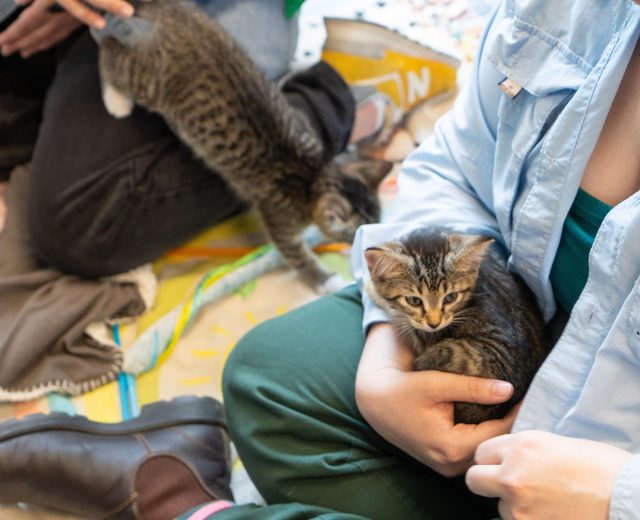
Tree House’s Foster Program is one of the most important lifesaving tools we have. Foster volunteers provide temporary homes for cats and kittens while they recover from illness or injury, gain confidence in a home, grow big enough for adoption, or simply take a break from the shelter environment as they wait for adoption.
What Makes A Great Foster?
We’re looking for compassionate people who are ready to make a difference in a cat’s life. No prior experience is needed: Your care and commitment are what matter most!
To foster with Tree House, you’ll need:
- To be 18 years of age or older
- A safe, quiet space in your home, like a bathroom or spare room
- Patience, compassion, or curiosity—we’ll help you learn the rest!
- Access to basic cat supplies (litter box essentials, dishes, toys, scratchers)—though we can offer support where needed
- Willingness to partner with our team, ask questions, and share updates
- Reliable transportation to and from Tree House for appointments and supply pickup


We offer many types of fostering opportunities:
- Kittens: our care allows young kittens to grow and learn social skills until they are ready for adoption at eight weeks old.
- Recovery: You can help a sick or injured cat recover and get back on their paws.
- Socialization: You can help shy cats and kittens build positive experiences with people and home routines.
- Foster-to-Family: You can provide a quieter home setting for cats who are ready for adoption and benefit from time outside the shelter.
How to Sign Up to Foster
Complete your foster survey: Fill out our foster survey so we can learn about your interests, availability, and any experience you have caring for cats or other animals.
Connect with our team: Once we receive your application, a member from our Foster Program will reach out to schedule a consultation. We’ll answer your questions, review our Foster Program, and help prepare you for your first foster experience.
After your consultation, you’ll officially join our foster volunteer roster! You’ll receive our Foster Care Guidebook and gain access to our digital bulletin board featuring cats and kittens currently in need of foster homes.
Welcome your first foster cat: When you’ve completed the onboarding process, you’re ready to pick up your first foster cat or kitten!
Questions? Call (773) 262-4000 ext. 115, or email our foster staff at foster@treehouseanimals.org
Questions to Ask Yourself Before Fostering
Fostering saves lives, but it’s also a commitment. Taking a little time to think through the questions below can help you determine whether fostering is the right fit for your home, schedule, and lifestyle right now.
YOUR HOME & HOUSEHOLD
Do I have time to provide a foster cat with a consistent routine?
Many of our fosters work full-time jobs, have families, and maintain busy social lives. The key isn’t being home all day—it’s being able to provide consistency. Cats thrive on predictable routines, and foster animals often need extra monitoring, socialization, or medical care. As a general guideline, plan to spend about two hours each day caring for and interacting with your foster cat. Kittens under 6 weeks and more complex medical cases often require additional time for feeding, administering medications, routine cleaning, and monitoring health.
Is everyone in my household on board with fostering?
Fostering tends to go most smoothly when everyone sharing the home understands the commitment involved. Before bringing home a foster animal, consider discussing expectations with roommates, family members, or partners, including responsibilities, space requirements, and the possibility of short-notice veterinary appointments.
What space can I dedicate to a foster cat?
An ideal foster space is a single room in the home, easy to clean, and offers enough space for the cat to eat, rest, play, and use a litter box comfortably. Cats are territorial creatures, so change can be hard for them! When we relocate them to a new environment and give them too much room all at once (i.e., let them have free rein of the full home), it can take them a lot longer to feel safe and comfortable in the new territory.
Spare bedrooms or bathrooms, at-home offices, large walk-in closets, sunrooms, and similar spaces often work well. Be mindful to block access to those hard-to-reach spaces while offering plenty of hiding spots that still allow you to interact with the cat comfortably (think cardboard boxes, cave beds, draped chairs, and the carrier they arrive in). Cats also appreciate vertical territory, so shelves, cat trees, and window perches can help make even smaller spaces feel larger. Some foster animals—such as very young kittens or cats recovering from certain medical procedures—may need to spend part of their foster stay in a large crate or playpen.
Can I keep my foster cat completely separate from my resident pet?
For the safety of both foster animals and resident pets, Tree House requires foster cats to remain fully separated initially to allow close monitoring of health and behavior. Because we often have limited history on animals arriving in our care, they may have been exposed to contagious illnesses before intake, even if they appear healthy. This separation period allows for close monitoring during the incubation period for common illnesses while cats receive veterinary care and preventive treatments. For kittens, we ideally recommend waiting until they have received at least two rounds of vaccines alongside no symptoms before considering introductions.
While the risk becomes lower over time, we can never guarantee zero risk. For that reason, resident pets should be up to date on vaccines and preventive care before fostering. Before fostering, consider whether you have a space that can be securely closed off from other animals, possibly for the full duration of the foster period.
TRANSPORTATION & ACCESS TO CARE
Can I bring my foster cat to Tree House for appointments?
Tree House provides all medical care and food supplies for foster animals, but foster volunteers are responsible for transportation to and from appointments and for supply pickups. Depending on your foster’s needs, this may include routine vaccinations, diagnostic visits, veterinary rechecks, surgeries, or illness-related visits. Healthy kittens often visit every 2–3 weeks, while medical fosters may need appointments every 7–14 days, possibly more frequently if concerns arise.
If I don’t have access to a car, do I have a backup transportation plan?
Public transit can work for some cats, but it may not be the best option for every animal. Consider whether you would be comfortable using a rideshare service, taxi, pet transport volunteer, or asking a friend or family member for help if needed. Having a transportation backup plan in place can provide added flexibility if unexpected appointments come up.
Can I act promptly if a medical concern or emergency arises?
If your foster animal becomes sick or injured, Tree House should be your first point of contact. Our veterinary team is available seven days a week and provides medical care for animals in our Foster Program. We are the primary vet care for these animals, so whether it’s during normal or after normal business hours, we ask that foster volunteers always follow guidance in place and contact our team so we can help determine the best next steps.
Fostering can occasionally require some flexibility, as animals may need to be seen on short notice. Before fostering, consider whether you would be able to arrange transportation or coordinate with our team if your foster cat needs medical attention. If transportation or scheduling might be a challenge, please let us know—we’re happy to discuss what support and accommodations may be available.
DAILY CARE NEEDS
What supplies do I need to foster, and do I need to provide them myself?
Tree House provides all food and medical care for our Foster Program animals. Whether you’re caring for an adult cat, kittens, bottle babies who need formula, or a cat on a prescription diet, we’ll make sure their nutritional and medical needs are covered.
We do ask foster caregivers to provide the everyday basics, such as a litter box, litter, litter scoop, food and water dishes, toys, and scratching surfaces. Many people already have some of these items at home, and they can often be reused between fosters after mindful disinfection. If obtaining supplies is a challenge, please don’t let that stop you from reaching out! We can often help with donated items or disposable supplies when available. Our goal is to make fostering as accessible as possible, and we’re happy to talk through what support may be available.
Am I prepared for the daily care and cleaning that comes with fostering?
Fostering involves all the responsibilities of pet care, plus a little extra as our foster volunteers are often helping these animals prepare for adoption. Daily tasks often include multiple feedings, litter box cleaning, administering medications, monitoring health, laundering bedding, and keeping living spaces clean. Many foster animals are recovering from illness, so proper disinfection is essential to prevent the spread of disease between foster animals and resident pets. We’ll teach you everything you need to know and help you determine whether fostering is a good fit for your schedule and lifestyle.
Am I comfortable with the possibility of minor household wear and tear?
Cats are cats! While many foster animals settle in beautifully, accidents and occasional damage can happen. Scratched furniture, stained bedding, or carpet accidents are all possibilities. We’ll help troubleshoot behavioral concerns whenever we can, but foster volunteers should be prepared for the occasional mishap.
BEHAVIORAL & MEDICAL SUPPORT
Am I comfortable fostering a cat who may be scared, shy, or slow to trust?
All cats—even the social and confident ones—need time to adjust to a new environment. Some may hide, avoid interaction, or seem withdrawn for days, or even weeks, before they begin to relax. A foster cat’s behavior in the first few days is rarely an accurate reflection of their true personality. Patience is one of the most valuable things a foster volunteer can offer, and open communication with our team is essential in helping you help these animals grow more settled in the new space. Sometimes success looks like helping a cat feel safe, even if they aren’t ready to be your best friend right away.
Am I comfortable with administering medications if needed?
Not every foster animal requires medication, but many do need something at some point along their journey. Depending on the animal’s needs, this could include treatments such as oral medications, topical medications, and eye or ear medications. Don’t worry if you’ve never done this before; we don’t need you to be an expert—just willing to work with us and give it a try! Tree House will always provide guidance and support along the way; the important thing is being willing to learn and follow the treatment plan provided.
Am I comfortable asking for help?
You are never expected to have all the answers. Whether you have questions about behavior, medical concerns, supply needs, or general cat care ponderings, the full Tree House team is here to help. The most successful foster volunteers aren’t the ones who know everything—they’re the ones who openly communicate and consistently reach out when they need support.
Can I follow Tree House guidelines, even when I might do things differently with my own pets?
We’re always eager to welcome foster volunteers with all kinds of animal experience, whether that comes from caring for your own pets, previous fostering, veterinary work, or other involvement in animal welfare. Because foster animals remain under Tree House’s care and ownership while in the program, we ask that caregivers follow our guidance on all aspects of care. Our protocols are designed to support the health, safety, and adoption success of each animal based on their individual needs and current shelter medicine best practices.
Successful fostering works best when foster caregivers and Tree House staff work together as a team with the cat’s wellbeing as the shared goal. We value your experience and observations, and we ask that you partner with us in following the care plan uniquely developed for your foster animal.
FOSTER TIMELINE & EMOTIONAL READINESS
Am I prepared for my foster cat’s timeline to change?
While we do our best to estimate and share how long a foster placement will last, recovery times, adoption timelines, and medical needs can be unpredictable. Some cats may be ready to move on sooner than expected, while others may need additional time in foster care. Your flexibility and ability to maintain open lines of communication with our team help ensure cats can receive the support they need, even when plans change.
Am I comfortable explaining to my friends that the animal is not mine to adopt out?
We love when foster volunteers help promote their foster cats, but all adoption inquiries and placements must go through Tree House. If friends, family, neighbors, or social media followers express interest, they’ll need to work directly with our team. Foster animals should never be rehomed without Tree House approval.
How will I feel when it’s time to say goodbye?
This may be the hardest question on the list. Many foster volunteers become deeply attached to the cats and kittens they care for, and saying goodbye is rarely easy. But every time you take in another foster case, you’re helping us create space in our shelter for another cat in need. The foster animals leaving your home are a success story, and your willingness to let them move on allows you to help save the next life waiting for a chance. The opportunity to say ‘yes’ to helping the next cat can make parting ways with a current foster a little easier. If you’ve ever worried about getting too attached, you’re not alone. Most foster volunteers do. It simply means you cared—and that’s exactly what these animals need!
Of course, if you find that your foster animal has become a permanent part of your family, foster volunteers are welcome to adopt their foster pets. Some people discover that a particular cat is simply meant to stay with them, while others find fulfillment in continuing to foster different animals over time. Both choices make a meaningful difference in the lives of cats in need, and there is no right or wrong path—only the one that feels right for you and your family.
